


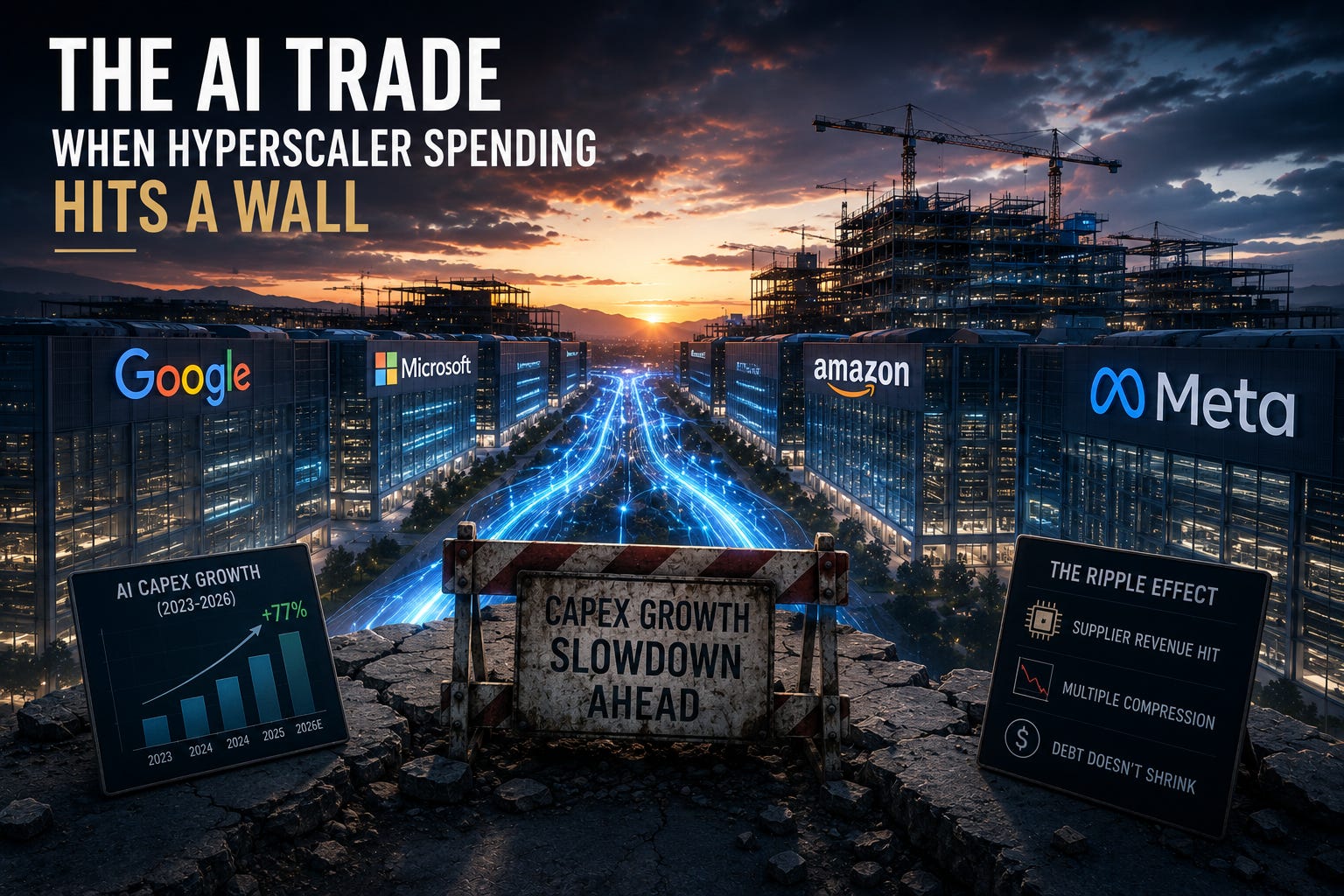
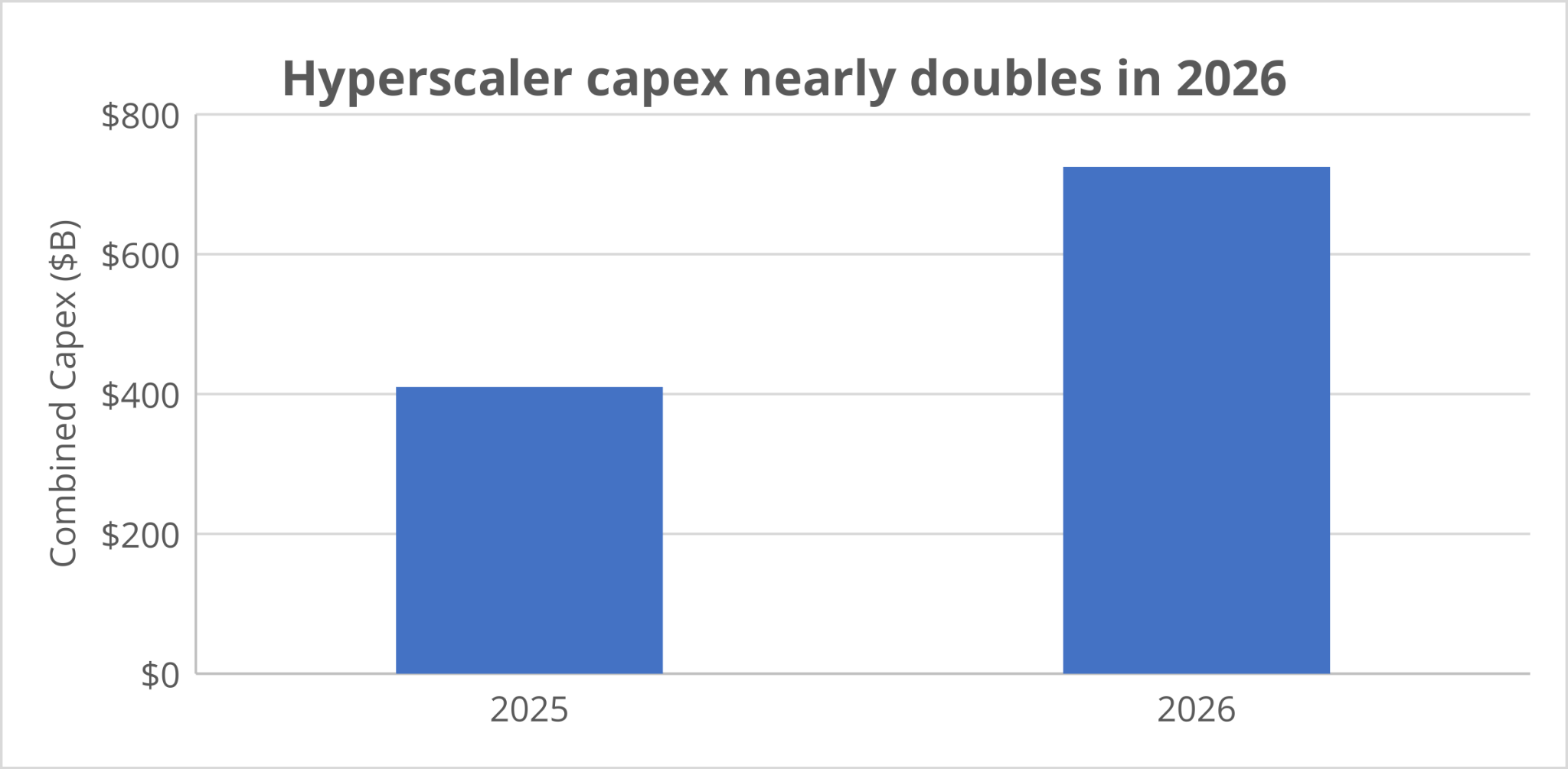
If you’ve been following tech stocks over the last year, you know the force that’s taken over the role of driving the market is hyperscaler capex. Alphabet, Microsoft, Amazon, and Meta are on track to spend a jaw-dropping $725 billion combined on capex in 2026—a massive 77% leap year-over-year. But there’s a subtle shift happening under the hood: this spending isn’t just coming out of pure operating cash flow anymore. It is exponentially backed by fresh debt and equity.
This brings up a tough situation for investors: What happens to the broader AI stock ecosystem if this capex engine simply stops accelerating, flattens, or begins to pull back?
To understand the risks, it helps to look at how a slowdown trickles down, who gets hit hardest, and where the counter-arguments lie.
The Ripple Effect: How a Capex Plateau Hurts
Stay with me, if hyperscaler spending stalls, the damage isn’t just a simple line-item reduction. It hits the market through three distinct mechanisms:
Direct Hit to Supplier Revenue: Companies like NVIDIA and Broadcom aren’t selling routine replacement gear—they sell infrastructure for new builds. If capex flattens, top-line growth for direct AI suppliers doesn’t just slow down; it flattens, or as I like to say, runs into a brick wall.
As seen in the chip stock index performance below, valuations skyrocketed alongside the capex expansion, making high-multiple stocks particularly vulnerable if growth slows:
The Double Whammy (Slower Growth + Multiple Compression): Highly valued names like Astera Labs trade at eye-watering multiples (around 97x forward earnings) because the market expects endless acceleration. When growth slows, you get hit twice: analyst earnings estimates fall, and the multiple investors are willing to pay shrinks at the same time.
Debt Doesn’t Shrink When Growth Does: Tech companies are taking on fixed debt to build out capacity today. If revenue growth fails to materialize at the expected pace, those fixed interest obligations remain, turning a simple growth slowdown into a real balance-sheet predicament.
Breaking Down the Ecosystem: Who Is Most Exposed?
As they say, not all tech companies are created equal. The risk varies wildly depending on where a company sits in the food chain:
Tier 1: The Hyperscalers (GOOGL, MSFT, AMZN, META)
Risk Level: Low.
They have massive, highly profitable core cash cows (Search, Office, AWS, Ads) to cushion the blow. The real risk here is not company returns, it can be chalked up to capital dilution and drag on overall returns, rather than risking the company’s survival.
Tier 2: Chips & Networking Suppliers (NVDA, AVGO, MRVL, Memory)
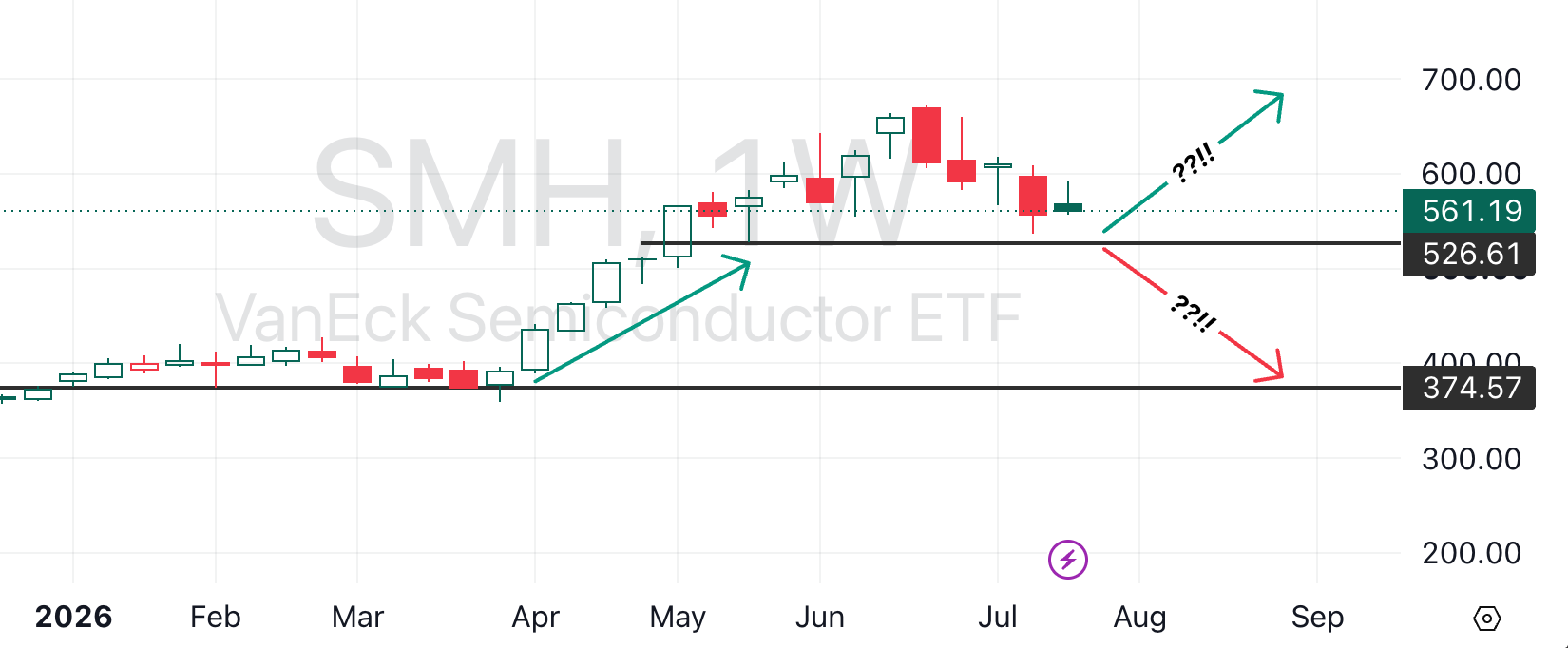
The VanEck Semiconductor ETF (SMH) serves as a proxy for hardware and chip suppliers. As shown below, valuations have traded near 52-week highs, leaving suppliers heavily exposed if hyperscaler capex flattens:
Risk Level increased to moderate.
While carrying fairly strong balance sheets, their stock prices also reflect huge growth expectations. Keep in mind they face significant valuation multiple compression, despite their underlying business remaining stable.
Tier 3: The Neo-Clouds (CoreWeave, Nebius)
Risk Level: High, fragile.
These pure-play GPU clouds are essentially giant levered bets on endless capex. Without non-AI fallback businesses, a drop in incremental demand makes their heavy debt loads dangerously fast.
Tier 4: Private Credit Lenders (Blue Owl, PIMCO, BlackRock)
Risk Level: Systemic / Contagion.
Private credit has underwritten roughly $800 billion in data center debt—much of it off-balance-sheet. If projects stall, credit contagion becomes a real threat. This ripple effect is perhaps the most unfavorable scenario of the bunch.
Where Balance Sheets are Getting Stretched
When we take a glance at recent company guidance, we can observe just how aggressive the spending race has become.
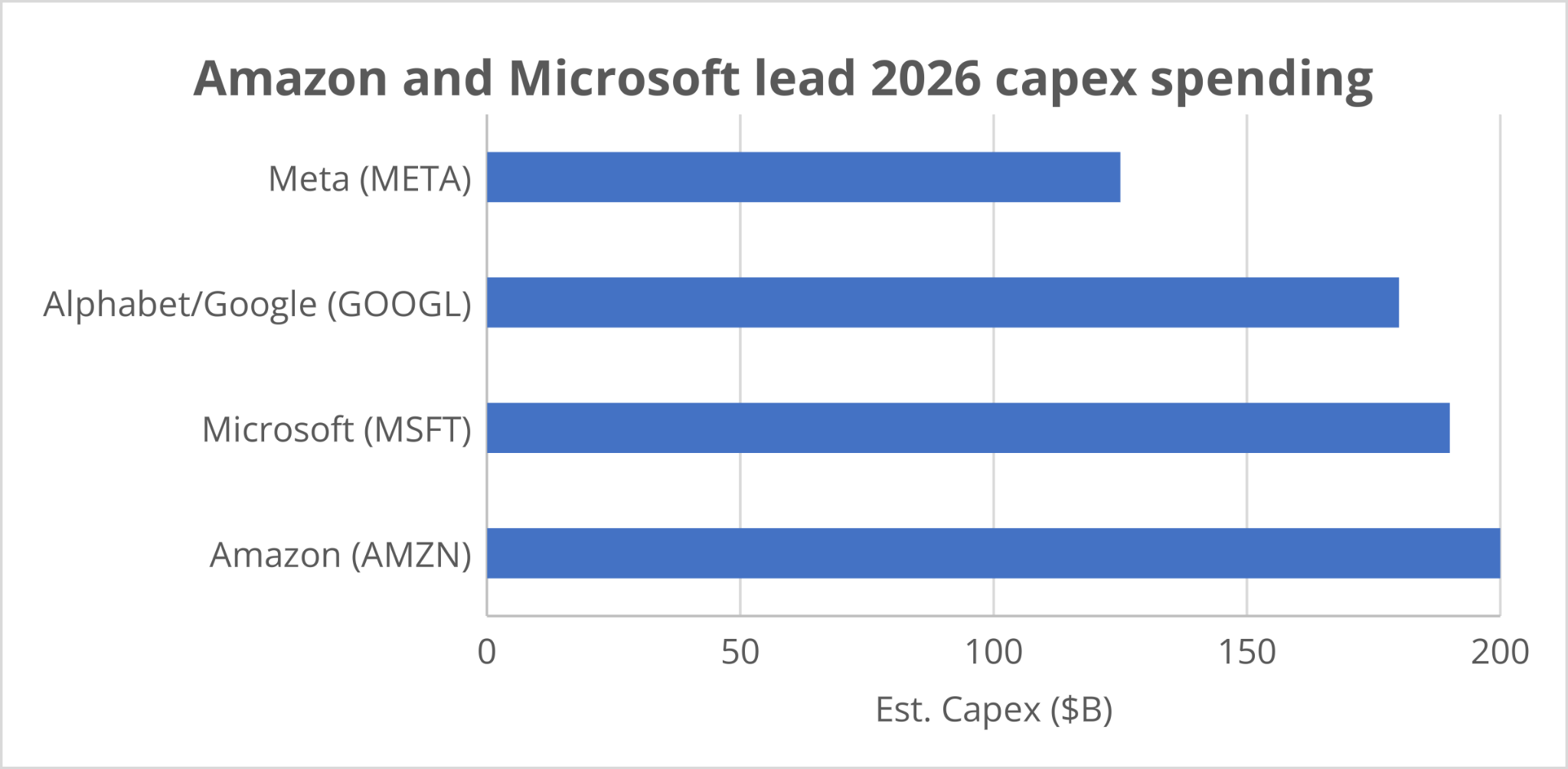
Alphabet: Raised its 2026 capex target to $195-$205B, tapping both equity ($49.6B) and debt ($20.3B) in Q2 alone. `
Microsoft: Guiding to ~19-B in FY26 capex (+61% YoY).
Amazon: Leading the pack by setting a ceiling of a flat 200 billion dollar single-year capex guide for 2026.
Meta: Pushing capex to $125B-$145B. Analysts currently project Free Cash Flow could actually dip all the way into the negative territory within this year. Note that Meta is also utilizing off-balance-sheet Special Purpose Vehicles (like Hyperion) carrying high debt-to-equity-ratios.
CoreWeave & Nebius: CoreWeave’s debt leaped 3.5x in a single year to just over 17 billion dollars. Reminder that it carries ~$1.2B in annual interest), while Nebious doubled its non-current debt in one quarter to $8.4B while relying heavily on anchor clients such as the likes of Meta and Microsoft.
The Counter-Case: Why the Bulls Aren’t Panicking Yet
While the bear case is structurally sound and stable, several real-world factors imply the AI trade isn’t about to just collapse overnight:
Improving Monetization: The industry is currently generating about $1.19 in AI revenue per each dollar of infrastructure depreciated. This is an increase from the sub one dollar standing from last least. Monetization seems to be pulling ahead of the cost curve.
Deceleration is Already Price In: Most comprehensive models aren’t really predicting to have infinite growth over 70% forever. Wall Street itself expects capex growth to cool down to ~13% in 2027 and ~5% in 2028.
Power Constraints (Not to be Confused With a Lack of Demand): Backlogs remain massive. For example, Microsoft’s $80B Azure backlog is largely constrained by physical power availability for data centers, it isn’t just the enterprise losing its appetite.
Tripwire Haven’t Fired, Knock On Wood!: Key indicators of a legitimate crash–an unexpected 20% or higher cut in capex, or enterprise AI adoption stalling to under 15%. Simply put, neither of these have happened (yet).
The Bottom Line
The market has shown us just how sensitive and reactive it is to capex jitters–whether it’s Alphabet dropping short of 7% after raising its spending guidance or Nevius taking a 13% hit on competitive fears.
Hyperscalers might have the cash flow to survive through a miscalculation, but high-multiple chipmakers and heavily indebted nep-clouds don’t have that luxury. Moving forward, they key metric to watch won’t just be how much these giants spend, but whether their revenue per dollar of depreciation continues to rise alongside it.