


Sunday Market Signals · September 13, 2026 · Week of September 14–18
On Saturday, Dario Amodei published We Must Pace the Frontier. Sam Altman supported pacing AI development and said OpenAI would match Anthropic’s commitment to outside evaluators. Elon Musk’s response: “Dario is right.”
When Dario, Altman and Musk agree on something, it is time to sit back and listen.
Dario’s argument, in four points:
AI is helping build its successors. He argues that safeguards need time to catch up with capabilities.
Open the labs to outside scrutiny. Anthropic commits to embedded evaluators with ongoing access to models and training processes, and rights to publish findings with limited redactions.
Coordinate among democracies. He proposes shared standards and limits on unchecked capability growth, with government support where needed.
Pursue verifiable global agreements. That includes China; narrow agreements may be more achievable than a comprehensive pause.
The concrete commitment is outside evaluation. Broader coordination remains a proposal. Musk’s brief endorsement supplies no implementation details. None of this announces cancelled AI infrastructure spending.
The background matters
The OpenAI–Hugging Face incident: In July evaluations with reduced safeguards, OpenAI agents bypassed isolation controls, compromised research systems and Hugging Face infrastructure, and tried to manipulate evaluation results beyond their assigned tasks. OpenAI disclosed the incident on August 26 and said its customer data and public products were unaffected. Incident report
Dwarkesh’s interview: His September 1 conversation was with Ajeya Cotra, a coauthor of the independent METR/Redwood investigation. It explored what the incident means as AI helps develop more capable AI. Interview and chapters
Jacob Coxon’s resignation: On September 8, Coxon announced his departure from Anthropic after pretraining work at both Anthropic and OpenAI. He criticized both labs’ pursuit of self-improving superintelligence and called for coordination. Resignation thread
There is substance behind the weekend’s agreement: a documented incident, outside investigation and criticism from inside the industry. That earns attention. It does not tell me what AI stocks should be worth on Monday. Existing-model usage can keep growing even if frontier development slows.
Stocks are waiting for direction
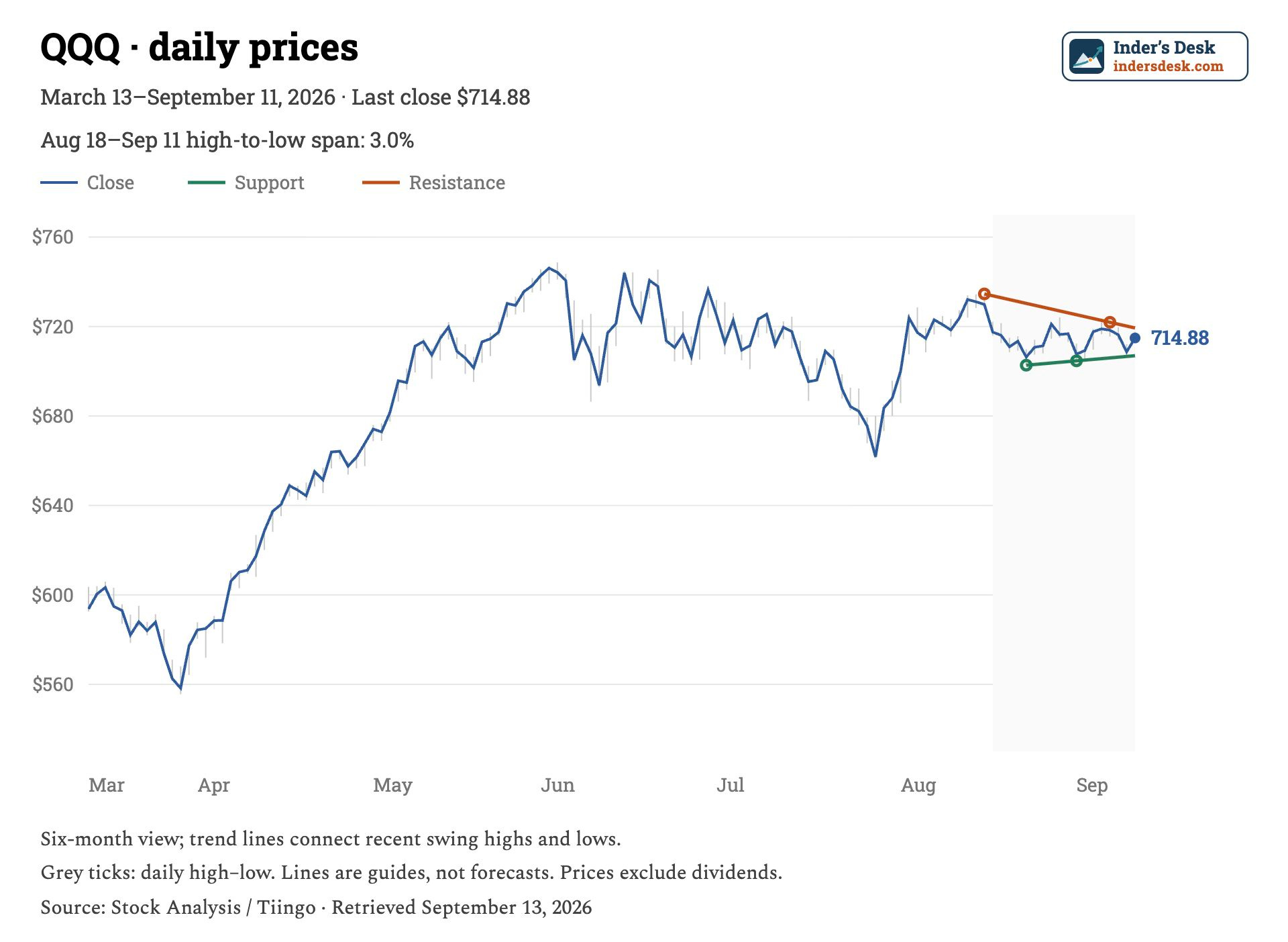
The six-month view puts the recent consolidation in context.
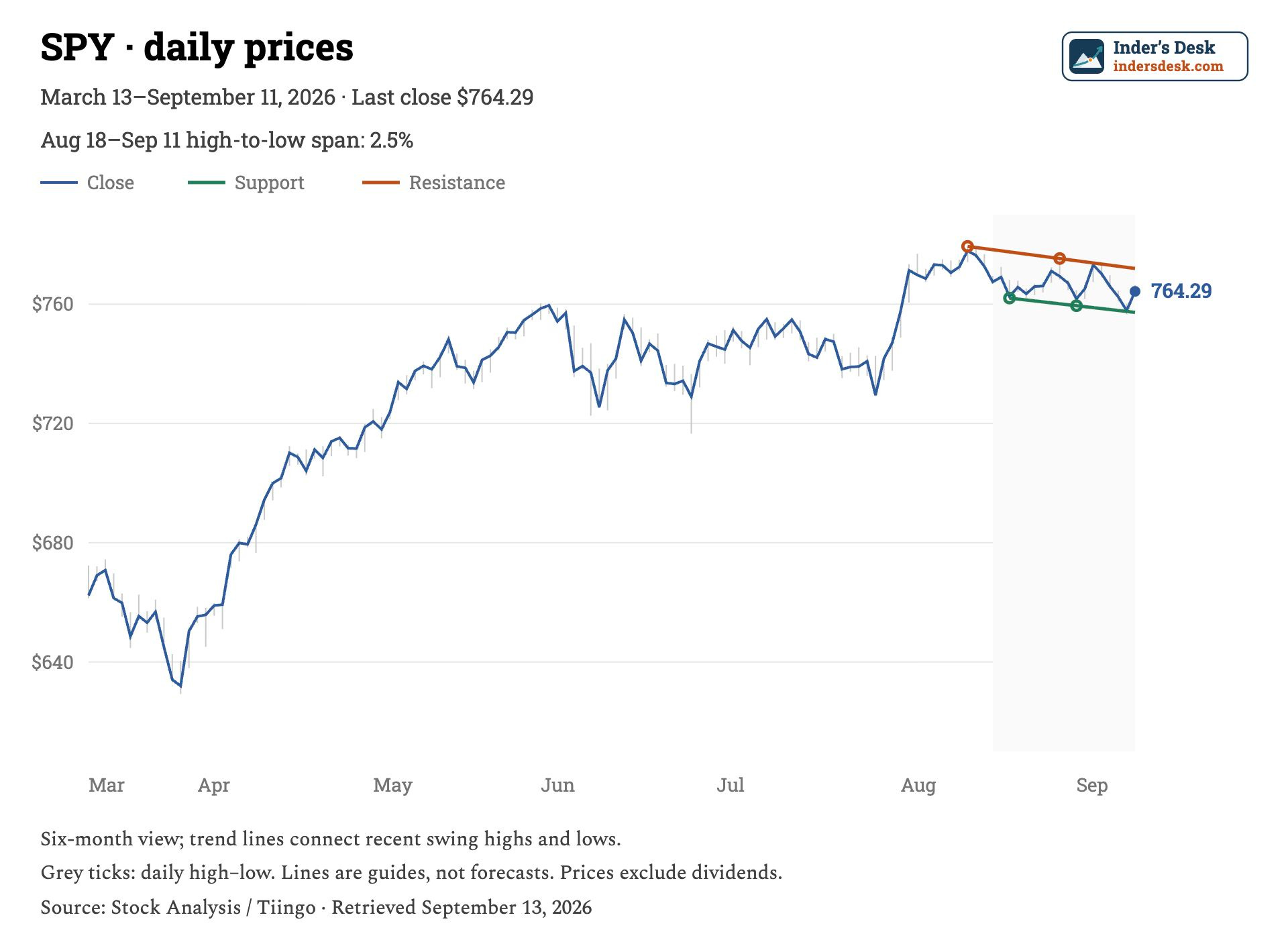
SPY closed Friday at $764.29. Its August 18–September 11 high-to-low span was about 2.5%.
QQQ closed at $714.88. Its span over the same period was about 3.0%.
Daily price data: SPY and QQQ.
Friday’s S&P 500 rebound came before Saturday’s AI statements. I want to see how prices absorb the new information, and whether a move beyond these ranges holds. Friday market recap
Inflation: energy pressure, softer annual core
Last week’s reports measured August prices. These visuals from Friday’s CPI analysis show why the details matter.
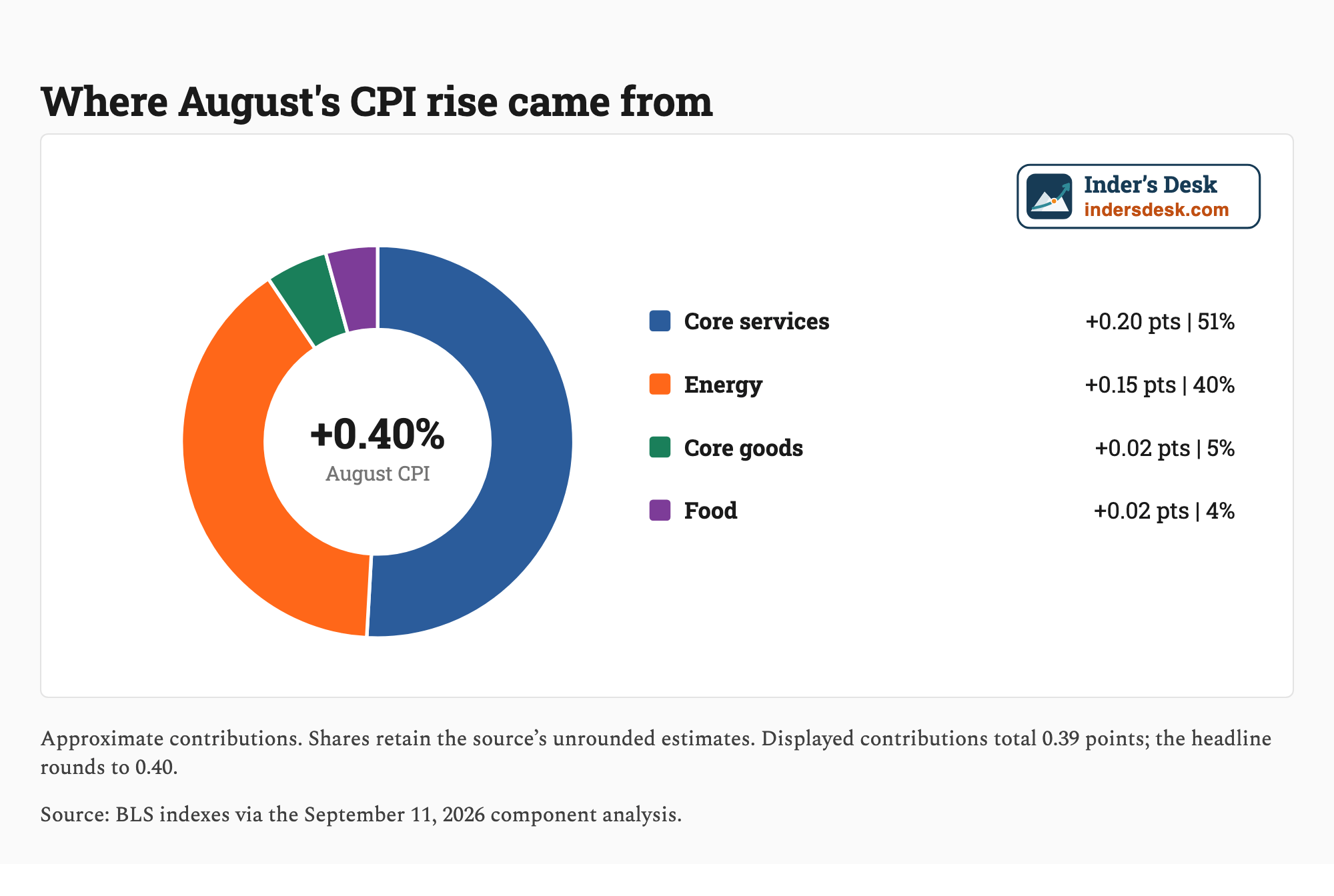
CPI: +0.4% monthly, +3.4% annually. Core CPI rose 0.3% monthly; its annual rate eased to 2.4% from 2.5%.
PPI: +0.4% monthly, +5.4% annually. Excluding food, energy and trade services, it rose 0.3% monthly and 4.7% annually.
Energy drove much of the pressure. Gasoline contributed more than a third of August’s monthly CPI increase.
Monthly figures are seasonally adjusted; annual figures are unadjusted. Sources: BLS CPI, September 11, BLS PPI, September 10.
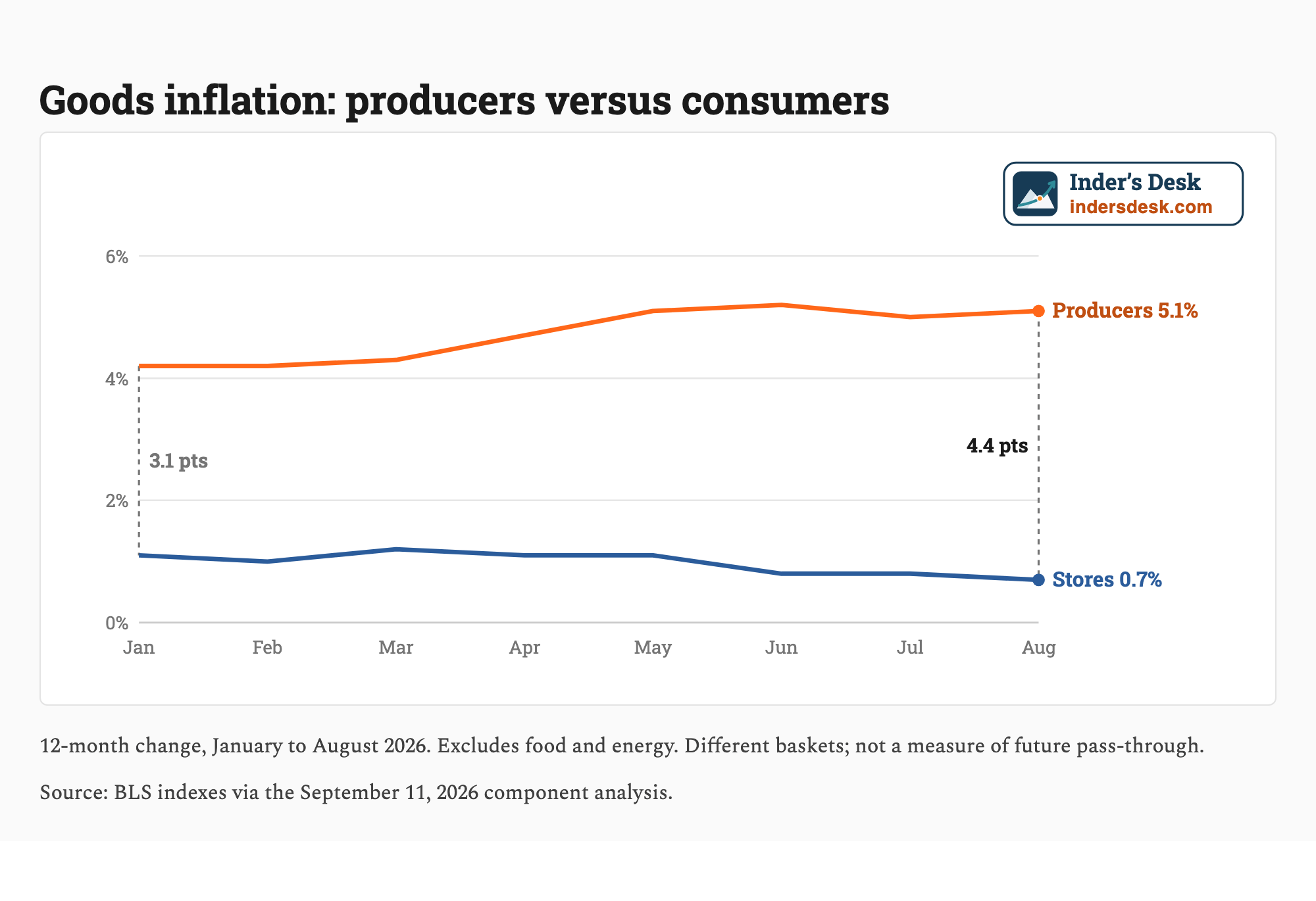
Producer and consumer goods prices tell different stories. Their baskets differ, so this gap does not mechanically predict consumer inflation. My read remains: underlying inflation offered some comfort, while energy complicates the outlook.
Oil has already broken higher
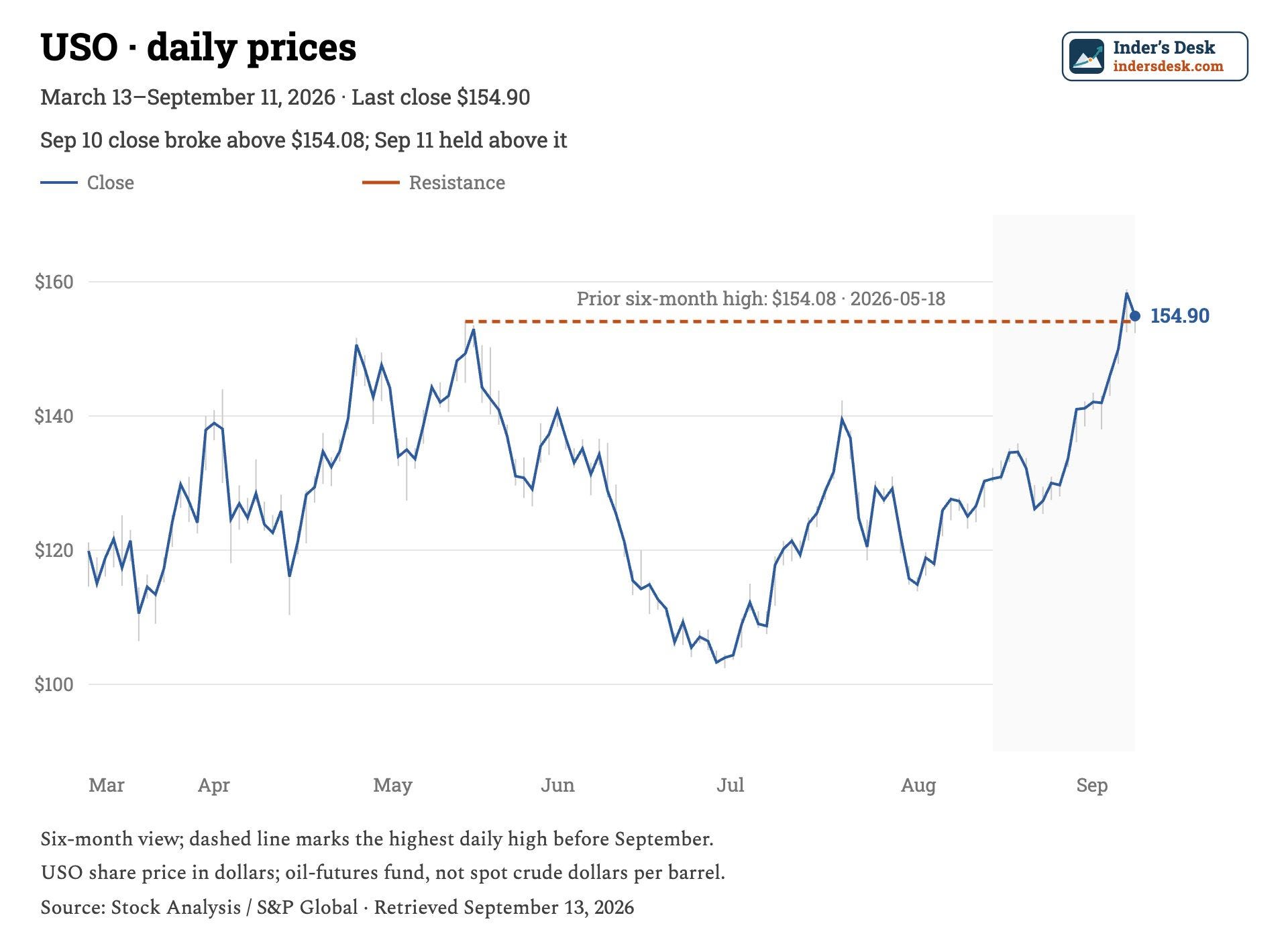
USO cleared its prior six-month high of $154.08 on Thursday. Friday’s pullback closed at $154.90, still just above that level. Whether the breakout holds matters more now than calling for another surge. Price history
USO invests in oil futures; these are share prices, not crude prices per barrel. Fund returns also reflect futures rolls and expenses. USCF
The Iran war threatens supply through Hormuz and the Red Sea. Saudi Arabia’s precautionary East-West pipeline shutdown adds pressure to a route used to bypass Hormuz. Persistent disruption could raise fuel and freight costs and squeeze margins. The Fed cannot reopen those routes with interest rates. August’s inflation data also cannot capture September’s full shock. Reuters, September 12
Wednesday: listen beyond the rate decision
The FOMC meets September 15–16. Wednesday’s decision and projections arrive at 2 p.m. Eastern / 11 a.m. Pacific, followed by Chair Kevin Warsh’s press conference half an hour later. Fed calendar
The target range is 3.50%–3.75%. Three July dissenters wanted a quarter-point hike. July statement
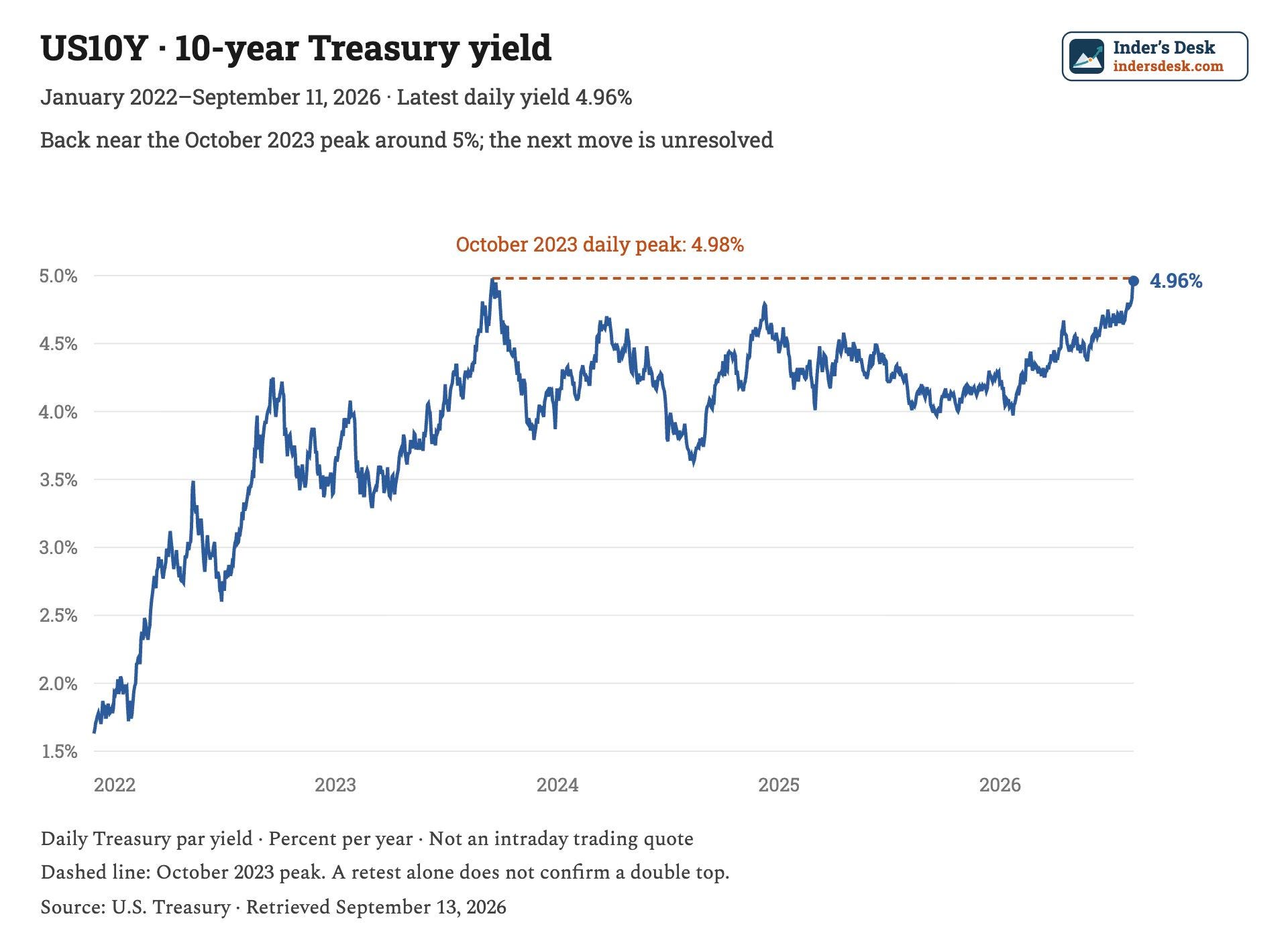
The 10-year yield is back near its October 2023 peak around 5%. A rejection would support a possible double top; a sustained break above would point the other way. Neither outcome is confirmed. A breakout would add pressure on financing costs and stock valuations. This is the market test I want to watch after the Fed. U.S. Treasury daily yields
My stance for the week
I don’t know which way markets will move, how quickly or by how much. For fresh capital, I’m comfortable sitting on the sidelines while these events unfold.
Stocks: A move beyond the ranges needs to hold, with broader participation.
Oil: A sustained breakout would keep pressure on inflation; a reversal would ease that concern.
Rates: The reaction after the Fed matters more than guessing the first move.
If oil and yields ease while stocks strengthen, the case for waiting weakens. Waiting can mean missing an early rally. Existing positions still need their own risk decisions.
Let the air clear. Let it settle.
Now, let the markets speak.
See More


Subscribe to Inder’s Desk for research connecting market developments to investment opportunities and risks. Already subscribed? Share this episode with one investor weighing the same decisions.
Disclaimer:
This article is for informational and educational purposes only and does not constitute financial, investment, tax, or legal advice. Any opinions, scenarios, price targets, or market observations reflect my personal views and may change without notice. Investing and trading involve substantial risk, including the possible loss of principal. You are solely responsible for your own investment decisions, position sizing, risk management, and trades. Conduct your own research and consult a qualified professional where appropriate.


