



The three projects
Three names carry almost all of the money, and they are easy to confuse.
Colossus I is the Memphis, Tennessee GPU cluster. The first large buildout, powered substantially by on-site gas turbines because grid power could not be had fast enough. This is the site that made the vendor list real: racks, servers, turbines.
Colossus II is the larger expansion across Memphis and Southaven, Mississippi. Its first 110,000 GB200 processors came online in 91 days, followed by another 110,000 GB300 processors in 64 days. SpaceX says the two facilities now provide approximately one gigawatt of compute power.
Terafab is different. It is a proposed effort with Tesla and Intel to design and manufacture logic and memory chips. SpaceX’s filings say the timeline, milestones and capital spending have not been determined. Neither Tesla nor Intel is obligated to remain involved.
The customers paying for the compute
SpaceX is not using all of this capacity internally. It is also selling access to other AI companies.
Anthropic agreed to pay $1.25 billion per month for access to approximately 325,000 Nvidia GPUs through May 2029, after reduced fees during the initial ramp. That schedule points to roughly $45 billion if it runs for the full term. However, either party may terminate after the initial three-month period with 90 days’ notice.
Google agreed to pay $920 million per month from October 2026 through June 2029 for access to approximately 110,000 Nvidia GPUs. That implies roughly $30 billion over the stated period. After December 31, 2026, either party may terminate with 90 days’ notice.
An unnamed third customer signed a $6.7 billion agreement, with service expected to begin in October 2026. SpaceX has not disclosed the customer or the contract’s termination terms.
These are real contracts and powerful evidence of demand. They are not the same as non-cancellable backlog through 2029.
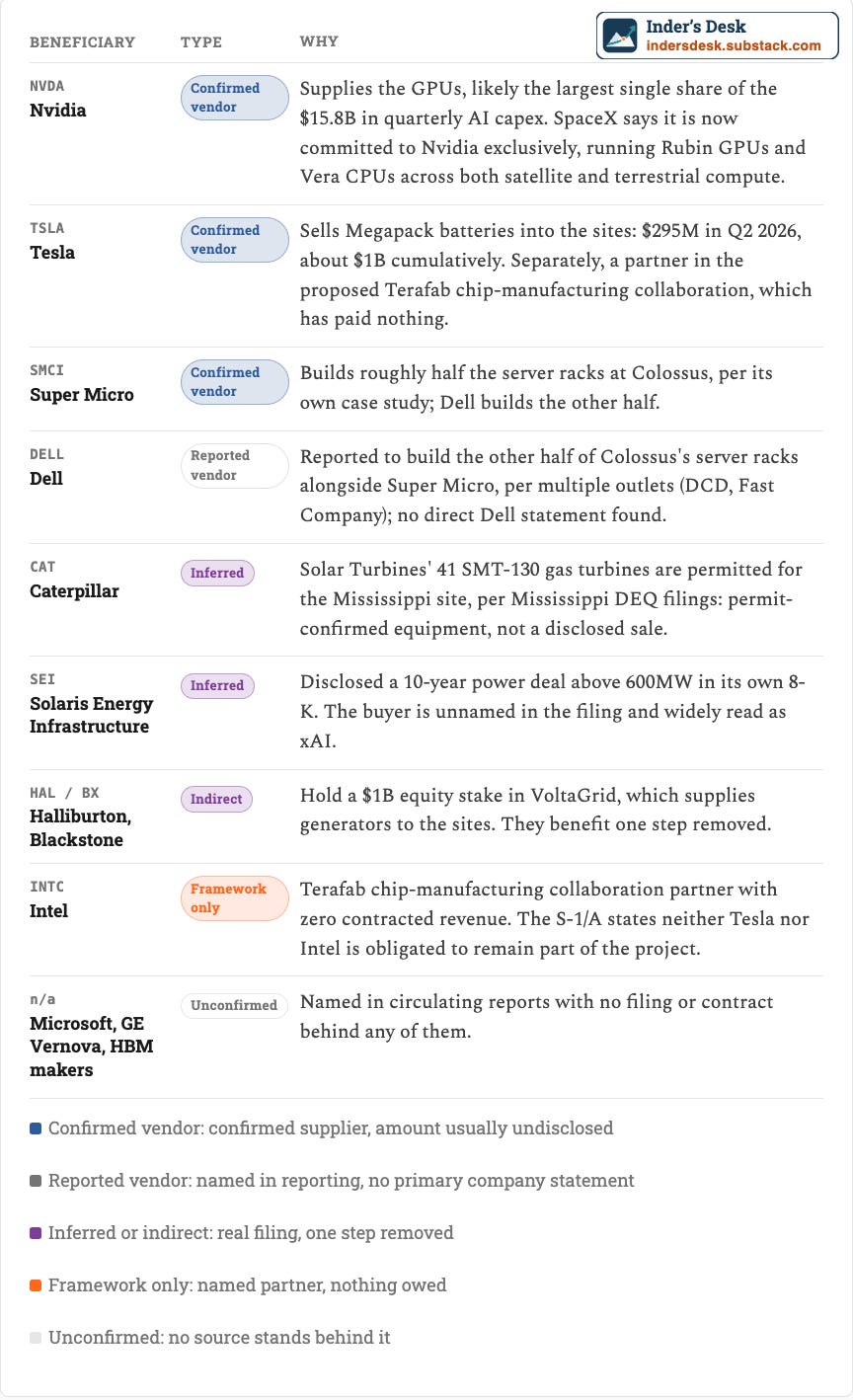
Who has actually been paid
Terafab is optionality, not revenue
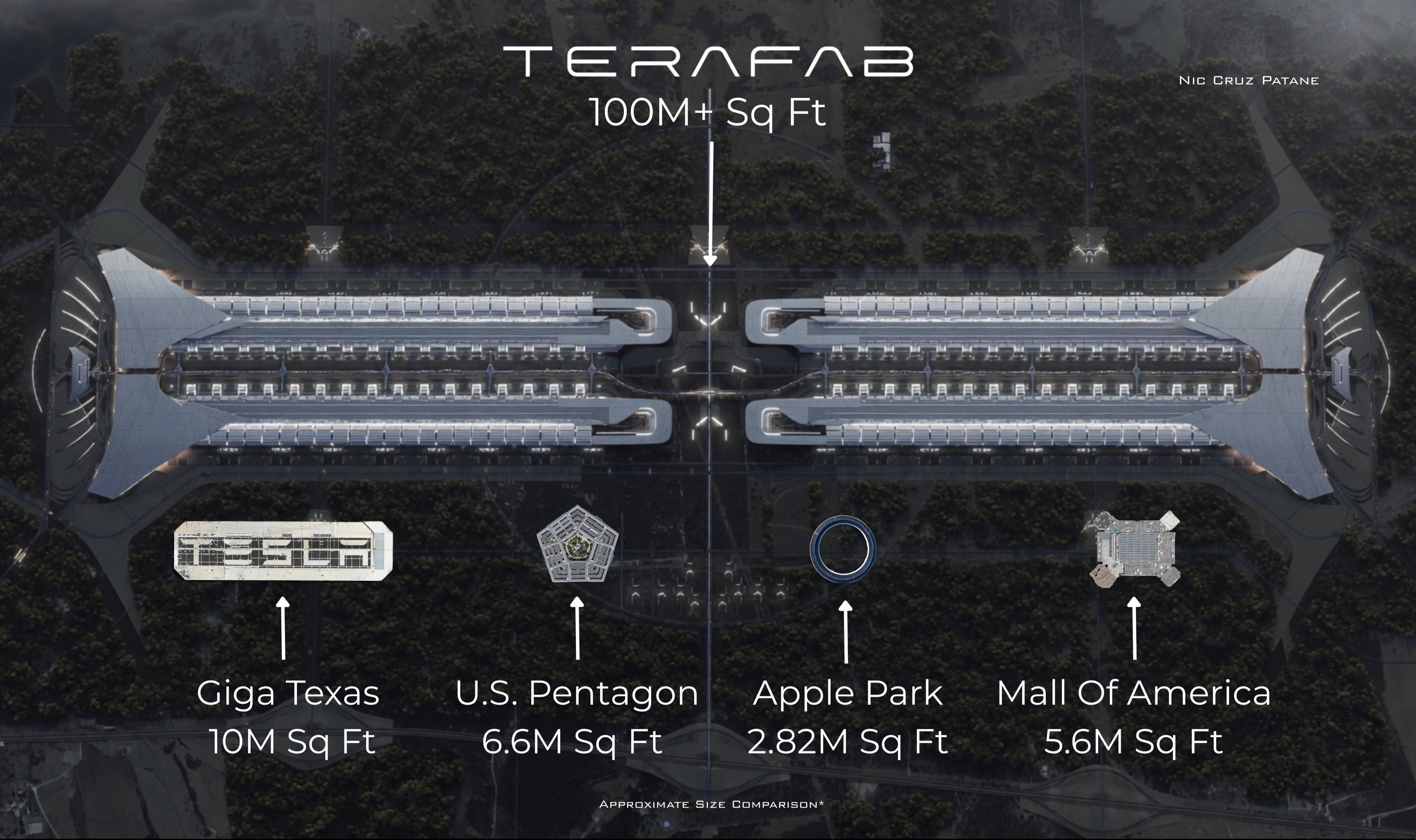
Terafab creates the most dramatic headlines because its ambition extends from chip design through logic, memory and advanced packaging. It also has the weakest near-term evidence.
The filings describe a general framework rather than a committed construction project. Specific agreements, spending and milestones still need to be negotiated. SpaceX also says it expects to continue sourcing a significant portion of its compute hardware from third parties.
That makes Terafab strategically important without making every company associated with it a current beneficiary.
The investment takeaway
The sourced money is still flowing into the physical stack: GPUs, liquid-cooled racks, batteries and power generation. Nvidia has the cleanest confirmed exposure. Supermicro and Tesla have confirmed equipment roles. Dell, Solaris and Caterpillar require more careful evidence labels. Intel and the wider semiconductor supply chain remain future optionality.
SpaceX has already proved that its compute can attract outside customers. The mistake is treating every company mentioned around Terafab as if it has already been paid.
Follow the contracts, filings and permits. Not the headlines.
Disclaimer:
This article is for informational and educational purposes only and does not constitute financial, investment, tax, or legal advice. Any opinions, scenarios, price targets, or market observations reflect my personal views and may change without notice. Investing and trading involve substantial risk, including the possible loss of principal. You are solely responsible for your own investment decisions, position sizing, risk management, and trades. Conduct your own research and consult a qualified professional where appropriate.
Appendix: Primary Sources
The filings and company materials underlying the figures and evidence labels in this article:
SpaceX Form S-1 prospectus — Colossus, Colossus II, Anthropic compute agreements and Terafab - link
SpaceX disclosure of the Google Cloud Services agreement - link
SEC correspondence regarding Terafab’s framework, commitments and unresolved capital spending - link
Tesla Q1 2026 Form 10-Q — recognized revenue from SpaceX’s Megapack purchases - link
Supermicro’s official Colossus project page - link
SpaceX EU prospectus — Colossus deployment timelines and compute capacity - link


